GAAR in Canada: How the General Anti-Avoidance Rule Affects Tax Planning
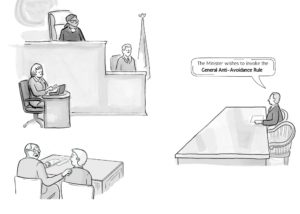
Canadian taxpayers are generally entitled to arrange their affairs in a tax-efficient manner. However, a transaction that technically complies with specific provisions of the Income Tax Act may still be challenged where it results in abusive tax avoidance.
Canada’s General Anti-Avoidance Rule, commonly known as the GAAR, is found in section 245 of the Income Tax Act. It allows the Canada Revenue Agency (CRA) to deny certain tax benefits arising from avoidance transactions that misuse or abuse Canadian tax legislation.
The GAAR was significantly amended in 2024. The current rules broaden the definition of an avoidance transaction, expressly address economic substance, and introduce a potential penalty where GAAR applies and the transaction was not properly disclosed.
For assistance structuring transactions before implementation, visit our Canadian tax planning lawyers page.
What Is the General Anti-Avoidance Rule?
The GAAR is a broad anti-avoidance provision intended to deny tax benefits arising from abusive tax avoidance while preserving taxpayers’ ability to obtain tax benefits that Parliament intended to provide.
Section 245 now expressly states that the GAAR seeks to balance:
- The government’s responsibility to protect Canada’s tax base and the fairness of the tax system; and
- Taxpayers’ need for certainty when arranging their affairs.
The current wording of section 245 can be reviewed on the Justice Laws Website.
What Is the Difference Between Tax Planning, Tax Avoidance and Tax Evasion?
These concepts should not be treated as interchangeable.
Tax Planning
Tax planning involves arranging transactions and affairs in a manner that takes advantage of deductions, exemptions, elections, rollovers, credits, and other tax results contemplated by Canadian law.
Examples can include corporate reorganizations, estate freezes, section 85 rollovers, structuring the sale of a business, and other transactions designed to achieve legitimate commercial and tax objectives.
Tax Avoidance
Tax avoidance generally refers to transactions designed to obtain a tax benefit without necessarily involving a direct violation of the tax legislation.
However, an avoidance transaction may be subject to the GAAR where the resulting tax benefit is considered abusive.
Tax Evasion
Tax evasion involves deliberate non-compliance with tax law, such as intentionally concealing taxable income, creating false expenses, or knowingly providing false information to the CRA.
Tax evasion can lead to civil reassessments, penalties, and potentially criminal investigation or prosecution.
For information about criminal tax matters, visit our criminal tax investigation lawyers page.
What Is an Avoidance Transaction Under the Current GAAR?
The definition of an avoidance transaction is broader than it was under the previous version of the GAAR.
Under subsection 245(3), a transaction that results in a tax benefit, or that forms part of a series resulting in a tax benefit, is generally an avoidance transaction unless it may reasonably be considered that obtaining the tax benefit was not one of the main purposes for undertaking or arranging the transaction.
This means a tax benefit does not have to be the sole or even necessarily the dominant purpose before the avoidance-transaction threshold may be engaged.
What Is a Tax Benefit?
The definition of a tax benefit under section 245 is broad.
It can include:
- A reduction of tax;
- Avoidance of tax;
- A deferral of tax;
- An increase in a tax refund;
- A reduction or deferral of an amount payable under the Income Tax Act; or
- The creation, increase, reduction, or preservation of an amount that may affect a future tax calculation.
A transaction can therefore potentially produce a tax benefit even where the immediate result is not simply a reduction in current-year income tax.
Does Every Avoidance Transaction Trigger the GAAR?
No.
Identifying an avoidance transaction is only part of the GAAR analysis.
GAAR generally applies only where the avoidance transaction results directly or indirectly in:
- A misuse of one or more relevant statutory or treaty provisions; or
- An abuse having regard to those provisions read as a whole.
A tax-motivated transaction is therefore not automatically abusive merely because it produces a tax benefit.
What Does “Misuse or Abuse” Mean Under GAAR?
The misuse-or-abuse analysis focuses on whether the tax result frustrates or defeats the object, spirit, or purpose of the provisions relied upon by the taxpayer.
This can require a detailed analysis of:
- The wording of the relevant tax provisions;
- The statutory context;
- The purpose of those provisions;
- The relationship between multiple provisions;
- The structure of the transaction or series; and
- The economic and commercial consequences of the arrangement.
GAAR disputes can therefore involve both detailed statutory interpretation and extensive evidence regarding how the transaction was structured and why it was undertaken.
How Does Economic Substance Affect the GAAR?
The current GAAR expressly addresses economic substance.
Subsection 245(4.1) provides that where an avoidance transaction, or a series containing an avoidance transaction, is significantly lacking in economic substance, that is an important consideration tending to indicate misuse or abuse.
A lack of economic substance does not automatically determine the result, but it can materially strengthen a GAAR challenge.
What Factors Can Indicate a Lack of Economic Substance?
Section 245 identifies several non-exhaustive factors that may indicate that a transaction or series significantly lacks economic substance.
These include circumstances where:
- The taxpayer’s opportunity for gain or profit and risk of loss remain largely unchanged;
- There is a circular flow of funds;
- Offsetting financial positions are used;
- The timing of steps neutralizes meaningful economic exposure;
- An accommodation party is used;
- The expected tax benefit exceeds the expected non-tax economic return; or
- All or almost all of the purpose of the transaction or series was to obtain the tax benefit.
What Are Specific Anti-Avoidance Rules?
The Income Tax Act also contains numerous specific anti-avoidance rules, sometimes referred to as SAARs.
These provisions target particular transactions or tax results.
Examples can arise in areas such as:
- Surplus stripping;
- Loss trading;
- Income shifting;
- Corporate reorganizations;
- Shareholder transactions;
- Foreign affiliate transactions;
- Trust arrangements; and
- Other specifically defined avoidance structures.
The existence or non-application of a specific anti-avoidance rule does not necessarily prevent the CRA from considering GAAR. The analysis depends on the relevant legislation and the structure of the transaction.
Is GAAR Only a “Last Resort” After Every Other Rule Fails?
It is more accurate to describe GAAR as a broad residual anti-avoidance rule rather than to say that every other provision of the Income Tax Act must first be “exhausted.”
The CRA can raise GAAR as a primary or alternative assessing position where it considers the statutory requirements satisfied.
The CRA also maintains a GAAR Committee that is consulted in many cases to promote consistency in the administration of the rule.
What Happens If the CRA Applies GAAR?
If GAAR applies, subsection 245(2) permits the tax consequences to be determined as is reasonable in the circumstances in order to deny the tax benefit.
Under subsection 245(5), this may include:
- Disallowing a deduction, exemption, or exclusion;
- Allocating income, losses, deductions, or other amounts to another person;
- Recharacterizing the nature of a payment or amount;
- Ignoring tax consequences that would otherwise arise under other provisions; or
- Making other reasonable adjustments necessary to deny the tax benefit.
Can the CRA Impose a GAAR Penalty?
Yes.
The current GAAR contains a specific penalty under subsection 245(5.1).
Where GAAR applies and the relevant transaction or series was not disclosed to the Minister in accordance with the applicable mandatory disclosure provisions, a penalty may apply.
The penalty is generally calculated as 25% of specified additional tax and reduced refundable tax credits resulting from the application of GAAR, subject to the statutory formula.
The calculation is reduced by certain gross negligence penalties imposed under subsection 163(2) in respect of the same transaction or series.
Can the GAAR Penalty Be Avoided Through Disclosure?
Disclosure can be critically important.
Subsection 245(5.1) ties the GAAR penalty to whether the relevant transaction was disclosed in accordance with section 237.3 or 237.4.
Canada’s mandatory disclosure regime can require reporting of reportable or notifiable transactions, and disclosure can also affect GAAR penalty exposure.
For more information, see our Canada Mandatory Disclosure Rules guide.
Is There an Exception to the GAAR Penalty?
Yes, but the statutory exception is narrow.
Under subsection 245(5.2), the GAAR penalty does not apply where the taxpayer demonstrates that, when entering into the transaction, it was reasonable to conclude that GAAR would not apply based on an identical or almost identical transaction or series addressed in:
- Published government administrative guidance or statements; or
- One or more court decisions.
The availability of the exception depends on the particular transaction and the authority relied upon.
How Did the 2024 GAAR Amendments Change Tax Planning?
The amendments materially changed the GAAR framework.
Important changes include:
- A new statutory preamble explaining the purpose of GAAR;
- A broader avoidance-transaction threshold based on whether obtaining a tax benefit is one of the main purposes;
- An explicit economic-substance analysis;
- A specific GAAR penalty; and
- A stronger connection between GAAR and Canada’s mandatory disclosure regime.
Transactions planned using older GAAR commentary should therefore be reviewed against the current version of section 245 rather than relying solely on the pre-2024 framework.
Is the Canada Trustco Three-Part Framework Still Relevant?
Yes, but older case law must now be considered together with the amended statutory language.
Historically, decisions such as Canada Trustco Mortgage Co. v. Canada described GAAR analysis through concepts including:
- A tax benefit;
- An avoidance transaction; and
- Misuse or abuse.
Those concepts remain central to section 245, but the statutory definition of an avoidance transaction and the role of economic substance have since been amended.
For that reason, taxpayers should be cautious about applying older GAAR cases mechanically to transactions governed by the current legislation.
Why Are Supreme Court GAAR Cases Still Important?
Supreme Court of Canada decisions remain important in understanding the misuse-or-abuse analysis and how courts determine the object, spirit, and purpose of tax provisions.
Cases such as Canada Trustco, Lipson, Copthorne, Alta Energy, and Deans Knight form part of the broader jurisprudence surrounding GAAR.
However, the 2024 statutory amendments mean that earlier decisions must be read together with the current wording of section 245.
Can Legitimate Commercial Transactions Still Be Subject to GAAR?
Potentially.
The existence of commercial objectives does not automatically prevent a transaction from being an avoidance transaction if obtaining a tax benefit was also one of its main purposes.
At the same time, genuine commercial consequences, economic risk, and non-tax objectives can be highly relevant to the overall analysis.
This makes contemporaneous documentation of commercial objectives and transaction rationale particularly important in significant tax planning.
What Should Businesses Document When Undertaking Tax Planning?
Depending on the transaction, useful contemporaneous documentation may include:
- The commercial objectives of the transaction;
- Board resolutions;
- Transaction memoranda;
- Legal agreements;
- Valuations;
- Financial projections;
- Expected economic returns;
- Business reasons for individual transaction steps;
- Tax advice and legal opinions; and
- Mandatory disclosure analysis.
Documentation created when the transaction is planned can become important if the CRA later challenges the arrangement.
Can GAAR Apply to Corporate Reorganizations?
Potentially.
Corporate reorganizations can involve provisions such as section 85 rollovers, share exchanges, estate freezes, dividends, capital transactions, and other provisions that produce intended tax consequences.
The fact that a transaction produces a tax benefit does not automatically make it abusive.
However, the transaction should be analyzed to determine whether the intended result is consistent with the object, spirit, and purpose of the provisions being used.
For assistance planning a corporate transaction, visit our tax planning lawyers page.
What Happens During a CRA GAAR Audit?
A CRA review involving GAAR may involve extensive examination of both the legal structure and the underlying commercial circumstances.
The CRA may request:
- Transaction agreements;
- Corporate records;
- Accounting records;
- Correspondence concerning transaction planning;
- Valuations;
- Financing documents;
- Records concerning the commercial purpose of the transaction;
- Mandatory disclosure filings; and
- Other information relevant to the series of transactions.
If you have received a CRA audit request, see our CRA Audit Letter guide.
For legal representation during an audit, visit our CRA audit lawyers page.
Can You Object to a GAAR Reassessment?
Yes.
If the CRA issues a reassessment applying GAAR, the taxpayer can generally challenge the reassessment through the Notice of Objection process.
A GAAR objection may involve arguments concerning:
- Whether a tax benefit exists;
- Whether the transaction is an avoidance transaction;
- The object, spirit, and purpose of the relevant provisions;
- Whether there is misuse or abuse;
- The significance of economic substance;
- The appropriate tax consequences;
- Whether a GAAR penalty applies; and
- The evidence supporting the transaction’s commercial objectives.
For information about objection procedure, see our Notice of Objection guide.
For legal representation, visit our CRA tax objection lawyers page.
Can a GAAR Dispute Go to Tax Court?
Yes.
If the objection process does not resolve the matter, a GAAR reassessment may proceed to the Tax Court of Canada.
GAAR litigation can be particularly complex because it may require detailed evidence concerning a series of transactions as well as legal analysis of the purpose of multiple provisions of the Income Tax Act.
For information about the litigation process, see our Tax Litigation in Canada guide.
For legal representation, visit our Tax Court appeal lawyers page.
Frequently Asked Questions About GAAR
What does GAAR stand for?
GAAR stands for General Anti-Avoidance Rule. Canada’s federal income-tax GAAR is found in section 245 of the Income Tax Act.
Is tax planning illegal in Canada?
No. Taxpayers may undertake legitimate tax planning and obtain tax benefits contemplated by Parliament. GAAR is directed at abusive tax avoidance rather than every transaction that reduces tax.
Does every tax-motivated transaction trigger GAAR?
No. A transaction may be an avoidance transaction without ultimately being abusive. GAAR generally requires the statutory misuse-or-abuse condition to be satisfied.
What changed under the new GAAR?
The current GAAR includes a broader avoidance-transaction test, an explicit economic-substance rule, a statutory preamble, and a potential GAAR penalty.
What does “one of the main purposes” mean?
The current avoidance-transaction test considers whether obtaining the tax benefit was one of the main purposes of the transaction or series. The tax benefit therefore does not necessarily have to be the sole purpose.
Does lack of economic substance automatically mean GAAR applies?
No. A significant lack of economic substance is an important consideration tending to indicate misuse or abuse, but the statutory GAAR analysis must still be completed.
How much is the GAAR penalty?
The current penalty is generally based on 25% of specified additional tax and reduced refundable tax credits resulting from the GAAR assessment, subject to the statutory formula, disclosure rules, and exceptions.
Can a GAAR reassessment be appealed?
Yes. A taxpayer may generally challenge a GAAR reassessment through a Notice of Objection and, if necessary, an appeal to the Tax Court of Canada.
Speak With a Canadian Tax Lawyer About GAAR
GAAR issues can arise both before a transaction is implemented and years later during a CRA audit or reassessment.
KR Law Firm assists individuals and businesses with Canadian tax planning, CRA audits, objections, GAAR reassessments, and Tax Court litigation.
Book a Free Consultation with one of our tax lawyers to discuss a GAAR, tax planning, or CRA dispute matter.
—
By Kaveh Rezaei – Principal Lawyer, KR Law Firm
Disclaimer: This article provides general information only and does not constitute legal advice. GAAR analysis is highly fact-specific and depends on the transaction, applicable legislation, relevant jurisprudence, and the version of section 245 that applies.

